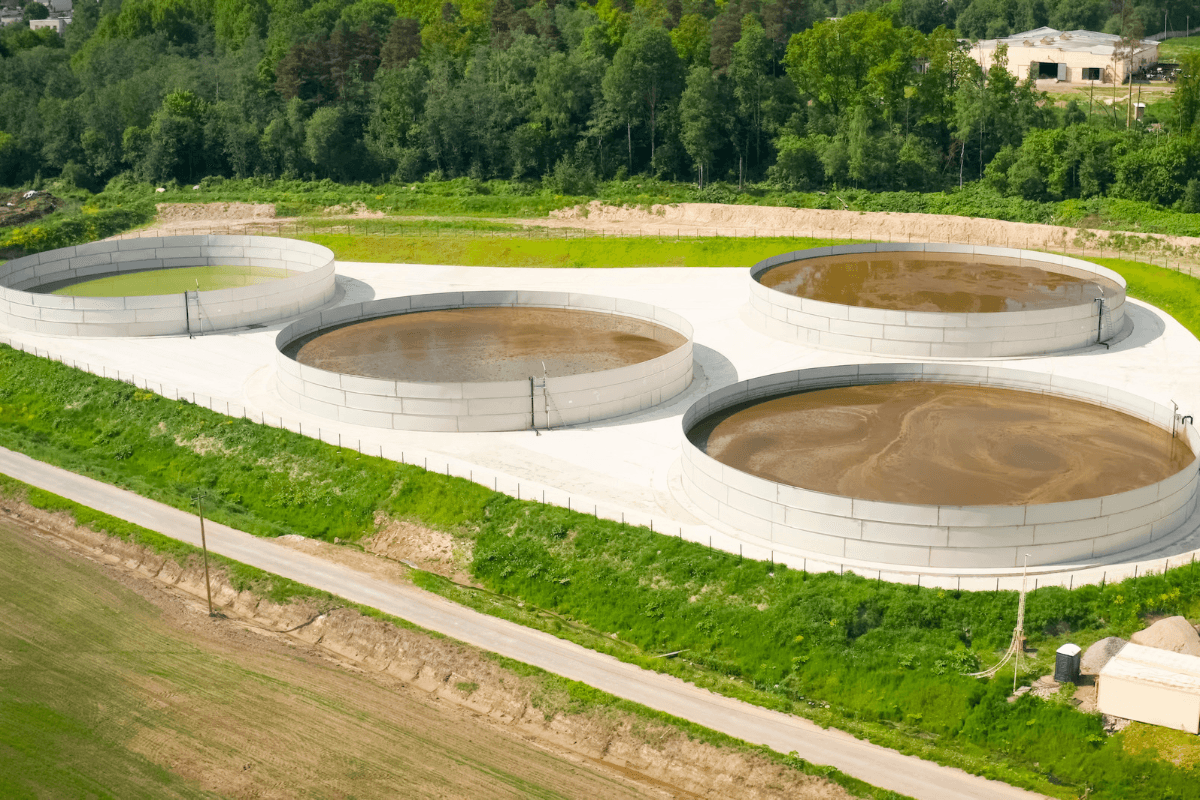
Effective biosolids odour control requires looking beyond the stabilization process itself. Biosolids stabilization is an important part of wastewater treatment, but it does not guarantee odour-free material. Even when stabilization is working as intended, wastewater treatment facilities may continue to receive odour complaints.
Often, the problem becomes most noticeable during the next stages of processing. Dewatering equipment releases unpleasant smells, storage areas develop persistent odours, and truck loading generates short but intense emissions that can travel beyond the facility.
For municipal plant managers and operations directors, these complaints can be frustrating. The biosolids may meet treatment requirements, yet the facility is still dealing with recurring nuisance odours and pressure from neighbouring communities.
To achieve effective biosolids odour control, look beyond the sludge. Once you understand where odorous compounds are released and how they enter the surrounding air, you can determine whether existing ventilation and air-treatment systems are adequately managing those emissions.
Why Stabilized Biosolids Can Still Produce Odours
Biological digestion breaks down biodegradable organic matter, but stabilized biosolids can still contain or subsequently generate odour-producing compounds. Alkaline stabilization works differently and can promote ammonia release.
Biosolids can contain residual volatile substances that become airborne when material is disturbed, heated, or exposed to changing environmental conditions.
Some of the most common biosolids odour compounds include:
- Hydrogen sulphide (H₂S): Associated with rotten-egg odours and commonly generated under anaerobic conditions.
- Mercaptans and other reduced sulphur compounds: Responsible for strong, unpleasant odours that may be detectable at very low concentrations.
- Ammonia: Particularly relevant to alkaline stabilization and certain high-temperature processes.
- Amines: Compounds that can produce fishy or pungent odours during decomposition and processing.
- Other volatile organic compounds (VOCs): Including organic acids and other substances that contribute to complex odour mixtures.
These compounds don’t necessarily appear in consistent concentrations. Odour emissions can change considerably throughout the day as equipment operates, material temperatures fluctuate, and biosolids move between processing stages.
Storage conditions introduce further complications. Materials held for extended periods may develop oxygen-depleted pockets that encourage additional microbial activity. Higher temperatures can increase the release of certain volatile compounds, while mixing or movement can release gases that have accumulated within the material.
Consequently, an odour complaint doesn’t automatically indicate a failure in digestion or stabilization. The facility may instead need a more effective way to capture and treat the compounds released during normal biosolids handling.
Where Do Biosolids Odour Problems Occur?
Odour emissions can develop at several points between stabilization and final transport or disposal, so identifying those spots is an important first step toward selecting the right treatment strategy.
Dewatering Equipment
Centrifuges, belt filter presses, and screw presses separate water from biosolids, producing a more concentrated material for storage, transport, or additional processing. Mechanical agitation and exposure to air can release residual volatile compounds during this process.
Inadequate ventilation can allow odours to accumulate in enclosed dewatering rooms. If contaminated air is exhausted without treatment, it can also create odour problems outside the building.
Biosolids Storage
Storage tanks, hoppers and stockpiles can become persistent odour sources, especially when material remains in place longer than anticipated.
Extended storage, fluctuating temperatures and uneven oxygen availability can contribute to changing odour conditions. These problems may be particularly noticeable during warmer weather or when stored material is disturbed.
Enclosed storage areas offer opportunities for foul-air collection, but simply enclosing the material will not eliminate odours unless the captured air is appropriately managed.
Conveying and Truck Loading
Transfer points are frequently overlooked in biosolids odour control planning. As biosolids move along conveyors, drop into hoppers, or are loaded into trucks, the movement exposes fresh material surfaces and can release accumulated odorous gases. These events may last only a short time, but their intensity can be significant.
For facilities near residential or commercial properties, a brief loading operation may generate enough odour to prompt complaints, even when emissions during the remainder of the day are relatively low.
Composting and Thermal Drying
Composting and drying introduce additional challenges because temperature and airflow are central to the processes. Composting can release ammonia, amines, and reduced sulphur compounds, particularly when aeration or mixing conditions are inadequate.
Thermal drying can release volatile compounds as biosolids are heated and moisture is removed. Both processes may produce variable exhaust-air conditions that require careful assessment before you select an odour-treatment system.
Why Ventilation Alone May Not Solve Biosolids Odour Problems
Ventilation is important for managing air quality in biosolids processing, helping to remove contaminated air from work areas, control indoor concentrations, and support appropriate working conditions.
But moving foul air outdoors doesn’t necessarily solve the underlying odour problem. If ventilation exhausts untreated air, the facility may simply transfer the odour from an enclosed processing area to the surrounding community. Similarly, increasing ventilation rates without considering treatment capacity can create additional challenges.
Higher exhaust volumes may dilute indoor concentrations but also increase the amount of contaminated air requiring treatment. Take a more comprehensive approach by evaluating where odours originate and how effectively they can be captured. Depending on the facility, this may involve enclosing conveyors, covering hoppers, improving collection around dewatering equipment, or maintaining appropriate negative pressure within processing buildings.
Once captured, the contaminated air can be directed to a treatment system designed for the compounds and airflow conditions involved.
How Photoionization Supports Biosolids Odour Control
Photoionization is an air-treatment technology that uses ultraviolet (UV) light and oxidation reactions to break down odour-causing compounds in contaminated air streams.
NeutraTek’s Neutralox photoionization technology is designed to treat foul air from municipal and industrial wastewater operations, including sludge-handling facilities. The treatment process involves two main stages:
- UV Treatment. Captured foul air first passes through dust filtration to remove larger particles, then enters the UV chamber, where UV light generates highly reactive oxidizing species, including activated oxygen, ozone and hydroxyl radicals. These substances react with airborne odour compounds, including hydrogen sulphide, mercaptans, and certain VOCs.
- Catalytic Treatment. The air then passes through a catalyst stage, where additional oxidation reactions help treat remaining odorous compounds and reaction products before the treated air is discharged.
For biosolids applications, this approach offers several potential advantages.
Photoionization can address mixed odour streams rather than focusing exclusively on a single compound. It can also be designed around variable concentrations associated with intermittent dewatering, conveying, and loading operations.
Unlike chemical scrubbing, the photoionization stage does not require routine chemical dosing or process water. However, treatment performance depends on the specific air stream, including its contaminant mixture, humidity, particulate loading, airflow, and peak concentrations. Your facility should evaluate these conditions when determining whether photoionization is appropriate and how the system should be sized.
What Photoionization Can and Cannot Address
Photoionization addresses odorous compounds after they have entered the air and been captured by a collection system. It doesn’t replace stabilization, improve digester performance, or prevent anaerobic conditions from developing within stored biosolids.
It also cannot directly control odours released from uncovered stockpiles or other sources where contaminated air isn’t effectively collected. Facilities experiencing persistent odours may therefore require a combination of process improvements, enclosure, ventilation, and atmospheric treatment.
For example, reducing excessive storage times may help limit further odour generation, while improved enclosure and photoionization can address emissions that occur during routine handling. The measures serve different purposes and can often complement one another.
Building an Effective Biosolids Odour Control Strategy
Before investing in new equipment, municipalities need to evaluate where their most significant odour problems occur and what their existing systems are accomplishing. A practical assessment should consider:
- Emission sources: Which processing stages generate the strongest or most frequent odours?
- Air collection: Are odorous areas enclosed, and is sufficient contaminated air being captured?
- Contaminant characteristics: Which compounds are present, and how do concentrations change during peak operations?
- Existing treatment: Is current odour-control equipment adequately sized and maintained for actual operating conditions?
- Community impacts: When and where do complaints occur, and do they correspond with measurable operating events?
Monitoring also needs to account for both routine conditions and short-term emission peaks, as average contaminant concentrations alone may not reflect the conditions responsible for the most disruptive odour events. Assess treatment performance using appropriate inlet and outlet measurements, operating data and complaint records to determine whether changes are producing meaningful improvements.
Improve Biosolids Odour Control With NeutraTek
Persistent biosolids odours don’t necessarily mean a wastewater treatment facility needs to replace its stabilization process. In many cases, the next step is evaluating how odorous air is collected and treated during dewatering, storage, conveying, loading, and additional processing.
NeutraTek can help municipalities assess these foul-air challenges and determine where Neutralox photoionization technology may fit within a broader biosolids odour control strategy.
Contact NeutraTek today to discuss your facility’s odour sources, operating conditions, and air-treatment requirements, or find a representative in your area.