
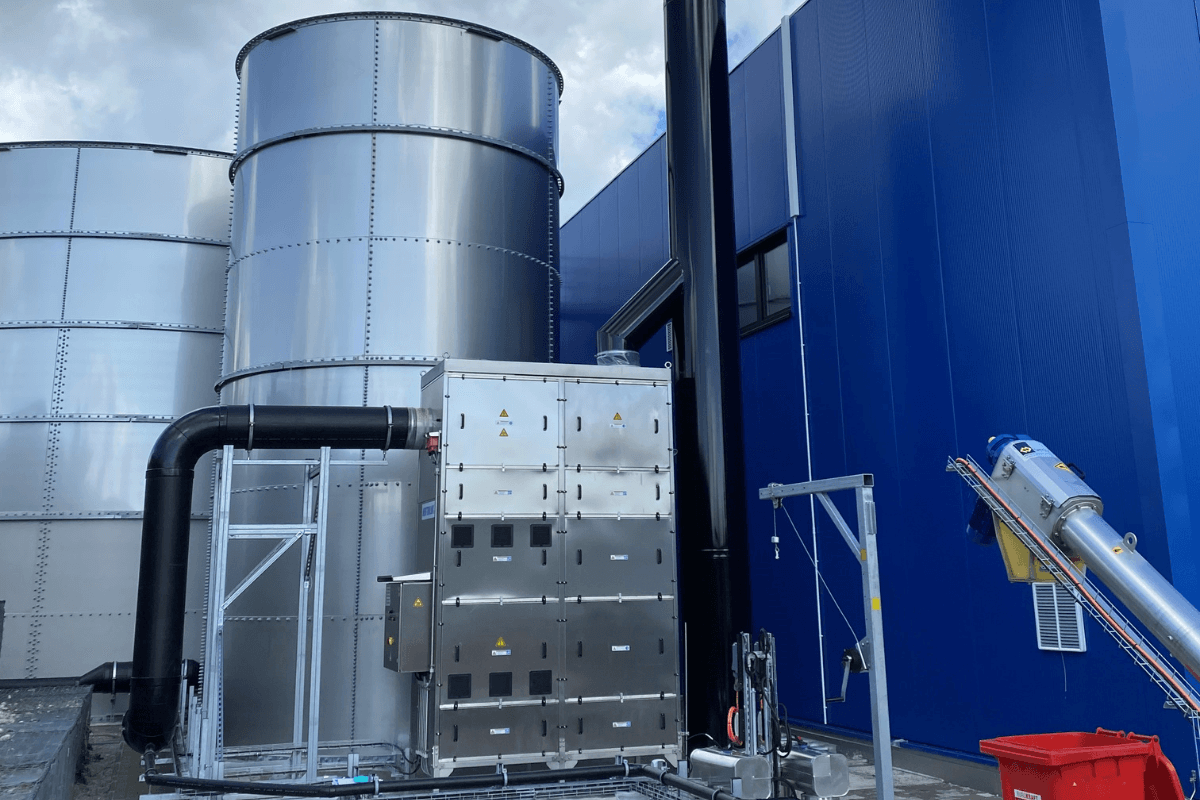
Strong odours are an unavoidable byproduct of many food manufacturing processes. From fermentation and meat processing to rendering, dairy production, and wastewater pretreatment, facilities routinely generate airborne compounds that can travel well beyond the production floor.
Unlike many environmental issues, odours don’t have to exceed regulatory limits to become a business problem. A single complaint from a nearby resident or business can lead to inspections, increased regulatory scrutiny, and pressure to implement permanent corrective measures.
Effective industrial odour control helps food manufacturers eliminate odour-causing compounds before they leave the building, reducing complaints, supporting regulatory compliance, and maintaining productive relationships with the surrounding community.
Why Food Manufacturing Creates Persistent Odour Challenges
Food processing facilities handle large volumes of organic material every day. As these materials are processed, stored, transported, or treated, microorganisms naturally break them down, producing gases that create characteristic food-processing odours.
Depending on the manufacturing process, food facilities may generate odour-causing compounds such as hydrogen sulphide (H₂S), ammonia (NH₃), volatile organic compounds (VOCs), mercaptans, organic acids, and other fermentation byproducts.
Many of these compounds are detectable at extremely low concentrations. Even when they don’t present a health risk, they can still trigger complaints if untreated air escapes the facility.
Food manufacturing also presents a unique challenge because odour loads rarely remain constant. Production schedules change throughout the day, equipment is cleaned between batches, wastewater flows fluctuate, and different product lines generate different contaminant profiles.
Facilities commonly experience odour issues during:
- Fermentation
- Rendering operations
- Meat and poultry processing
- Dairy manufacturing
- Food waste handling
- Byproduct storage
- Wastewater pretreatment
- Equalization tanks and collection systems
Unlike facilities with relatively stable emissions, food manufacturers often require systems that can adapt to changing operating conditions to account for their industrial odour control needs.
Odour Complaints Can Escalate Quickly
Many food processing facilities were built long before nearby residential and commercial development expanded around them. As communities continue to grow, maintaining effective odour control has become an increasingly important part of being a good neighbour.
Many food manufacturers hear about the odour emission problems from nearby neighbours before monitoring equipment detects them.
Complaints often begin during warmer weather, overnight production shifts, or periods of higher production, when odours are more noticeable beyond the facility boundary. Nearby residents, businesses, or employees report unpleasant smells, and what starts as an occasional complaint can quickly become a recurring issue.
Beyond the immediate inconvenience, persistent odours can affect a facility’s reputation within the community. They consume staff time and can complicate expansion plans or relationships with neighbouring businesses and municipalities.
Industrial Odour Control Supports Regulatory Compliance
Community complaints invite public relations challenges. Unfortunately, they can also attract regulatory attention.
While odour regulations vary by jurisdiction, food manufacturers are generally expected to take reasonable steps to prevent nuisance emissions from affecting neighbouring properties. Once complaints become frequent, regulators may take a closer look at a facility’s odour management practices, even if air quality measurements remain well below occupational exposure limits.
For facility managers, it’s far easier to prevent complaints than respond to them after they’ve been filed. Taking a proactive approach to industrial odour control helps reduce regulatory risk, demonstrates responsible environmental management, and shows both regulators and the surrounding community that the facility is committed to minimizing its environmental impact.
Why Traditional Odour Control Methods Often Fall Short
Several technologies are commonly used for industrial odour control, but food processing environments tend to expose the limitations of each approach.
Activated Carbon
Activated carbon works well when contaminant loads remain relatively low and consistent.
Food manufacturing facilities, however, often experience changing airflow volumes, humidity, and contaminant concentrations throughout the day. Under these conditions, carbon media may become saturated much sooner than expected.
Facilities frequently encounter problems like:
- Shorter media life
- Breakthrough odours
- Increasing replacement costs and a higher OPEX
- Reduced performance during humid conditions
- More frequent maintenance
Because activated carbon captures contaminants rather than destroying them, media replacement becomes an ongoing operational expense.
Chemical Scrubbers
Chemical scrubbers can effectively remove specific contaminants such as hydrogen sulphide.
However, they also introduce additional operational complexity through:
- Bulk chemical storage
- Chemical deliveries
- Dosing systems
- Routine monitoring
- Safety procedures
- Ongoing chemical consumption
They also tend to target specific contaminants rather than the broad mixture of compounds commonly found in food-processing air streams.
Biofilters
Biofilters have proven effective in certain applications, but they require significant physical space and ongoing media management.
Many food processing facilities (particularly older plants) simply don’t have room for large filtration beds or additional treatment infrastructure.
Variable Production Requires Flexible Industrial Odour Control
Food manufacturing rarely operates under the same conditions from one day to the next, and neither do the odours it produces.
A facility producing yogurt one day and cheese the next won’t generate the same air emissions. Production schedules shift with demand, equipment is cleaned between batches, and wastewater flows fluctuate throughout the day. As a result, both the type and concentration of odour-causing compounds can change quickly.
That variability creates a challenge for other odour control systems. Technologies that perform well under steady conditions may struggle when contaminant loads suddenly increase or shift.
To keep odours under control, food manufacturers need a solution that can handle changing operating conditions without constant adjustments, frequent maintenance, or interruptions to production.
Why Photoionization Works Well for Food Manufacturing
Food manufacturing requires an odour control system that performs reliably under changing operating conditions without creating additional work for plant staff.
Photoionization technology is designed to do exactly that. Rather than trapping contaminants in filter media or relying on continuous chemical dosing, it destroys odour-causing compounds as contaminated air moves through the system.
High-intensity ultraviolet light generates highly reactive oxygen species that break down hydrogen sulphide, ammonia, mercaptans, volatile organic compounds, and other odour-causing contaminants before treated air is released.
Because contaminants are destroyed rather than stored, the system continues to perform reliably even as production schedules, airflow, and contaminant loads change throughout the day.
Photoionization offers another important advantage for food manufacturers: a compact footprint. Many facilities have expanded over time, leaving little room for large biofilters, chemical storage tanks, or new treatment buildings. Photoionization systems can often be integrated into existing ventilation systems with minimal site modifications, making them well suited for both new installations and retrofit projects.
The result is a reliable industrial odour control solution that requires minimal routine maintenance, no chemical storage, and consistent performance, allowing operations teams to focus on production instead of managing odour issues.
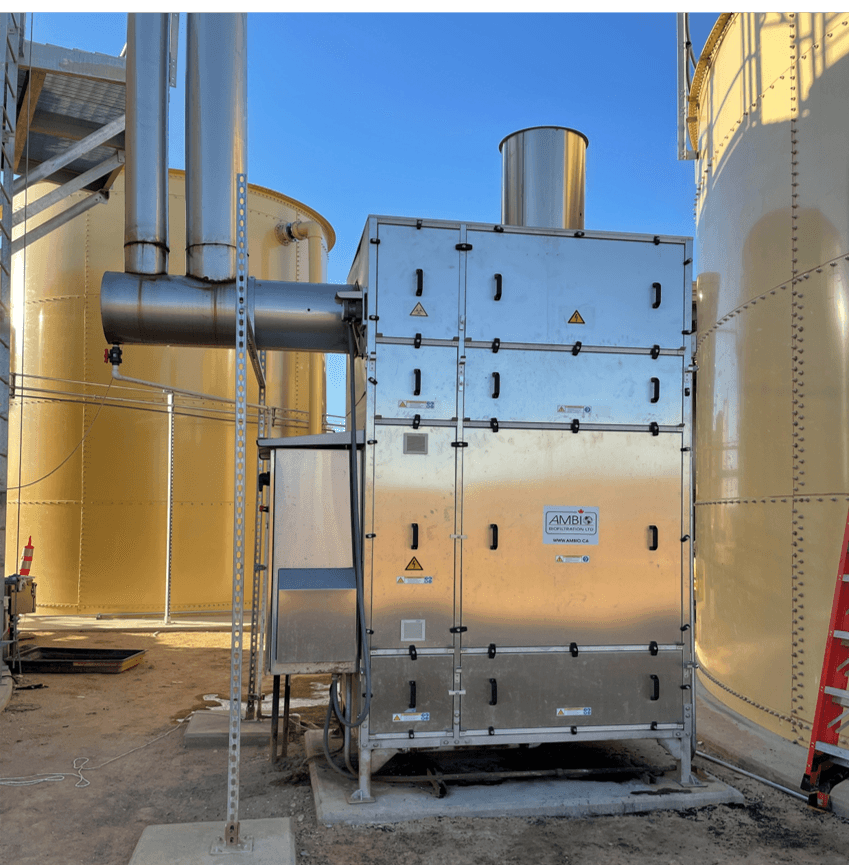
A Neutralox NX1700 unit installed at a dairy facility in Goodyear, AZ, treating odours from sludge storage tanks.
Looking Beyond Temporary Odour Management
Odour problems rarely disappear on their own. As production grows and neighbouring communities expand, temporary fixes like more frequent carbon changeouts often become increasingly expensive and less effective.
The most effective industrial odour control systems don’t simply mask or capture odours. They eliminate them before contaminated air leaves the facility. That means fewer complaints, less maintenance, stronger regulatory compliance, and more time focused on production instead of responding to odour issues.
If recurring odours are becoming part of your daily operations, it’s time for a long-term solution.
Contact NeutraTek to learn how the Neutralox photoionization systems eliminate odours at the source while delivering reliable, low-maintenance performance.