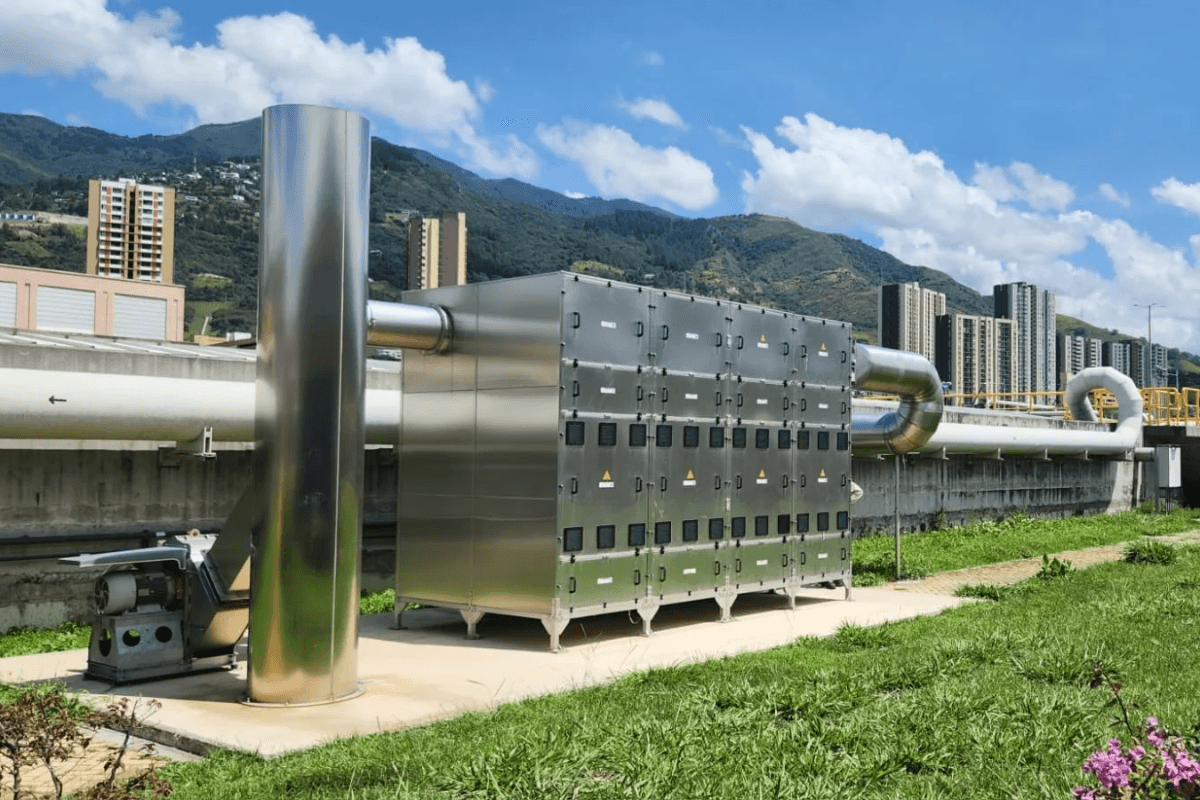
Capital plans for next year’s wastewater projects often include an odour control line item. The technology chosen for that line shapes costs for the next decade or more. Two systems with similar equipment prices can differ widely in what they cost to install, power, maintain and resupply. Comparing odour control technologies on equipment price alone leaves out most of that picture.
A complete comparison weighs three factors together:
- how effective each system treats foul air streams at site
- amount of operator time and consumables it requires
- what it costs over its full operational life cycle
The four technologies most often specified for municipal wastewater odour control are biological filtration, activated carbon, chemical scrubbing and photoionization (PI). Each odour control solution carries trade-offs that become clear once performance, maintenance and cost sit side by side.
What Drives the Choice of Odour Control Technology
When comparing odour control technologies, site conditions and concentration levels narrow the field before cost enters the discussion. Engineers and consultants typically screen odour control technologies against these factors:
→ The maximum odour intensity allowed at the site boundary
→ The foul air flow rate to be treated
→ The area classification of the space, including air changes per hour (typically 6 to 12) and any hazardous location rating
→ The types of odour-causing compounds present
→ How much concentrations fluctuate
→ The footprint available for treatment equipment
→ Whether treatment will be centralized or located at each odour source
H2S is generally the most common odour-causing compound in wastewater and the design-driving contaminant for most odour control strategies. Mercaptans, sulphides, ammonia and organic acids can also be present, and each technology handles that mix differently.
Load variability deserves more attention than many specifications give it. A low load generally means hydrogen sulphide (H2S) below 10 ppm on average and below 100 ppm at peak. A high load means H2S above 15 ppm on average and above 100 ppm at peak. A system sized only for average conditions can break through during peaks, releasing odour when complaints are most likely.
Once a short list exists, three cost figures guide the decision:
- total installed cost
- annual operating cost
- annual consumables cost
Together, over the life operation of the system, they form the basis of a lifecycle cost analysis.
Biological Filtration and Biotrickling Filters
Biological systems use bacteria living on a media bed to break down odour compounds as foul air passes through. Conventional biofilters typically achieve 85 to 90 percent odour removal.
Biotrickling filters, which circulate water over the media, can exceed 98 percent removal for H2S and reach 85 to 90 percent for other compounds.
Their appeal is a potentially low capital cost, provided the right filter media is selected, and low operating costs when conditions stay stable. Stability is the challenge. The bacteria are sensitive to inlet air temperature and humidity, and the bed needs a continuous supply of clean water for humidification. Gas conditioning equipment may be needed to keep conditions within range.
Other limitations follow from the design:
- A very large footprint compared with other technologies
- Media changeouts take several days and carry a high replacement cost
- A long start-up period while the bacterial population establishes
- Slow adaptation when odour loads change
- Potential for air to channel through the bed and bypass treatment
- Difficulty removing high concentrations of organic sulphides and mercaptans
- Pressure loss across the bed that grows over time
Supporting infrastructure adds to the total installed cost. Biological systems commonly need pumps, piping, a water supply and, in many cases, concrete storage tanks.
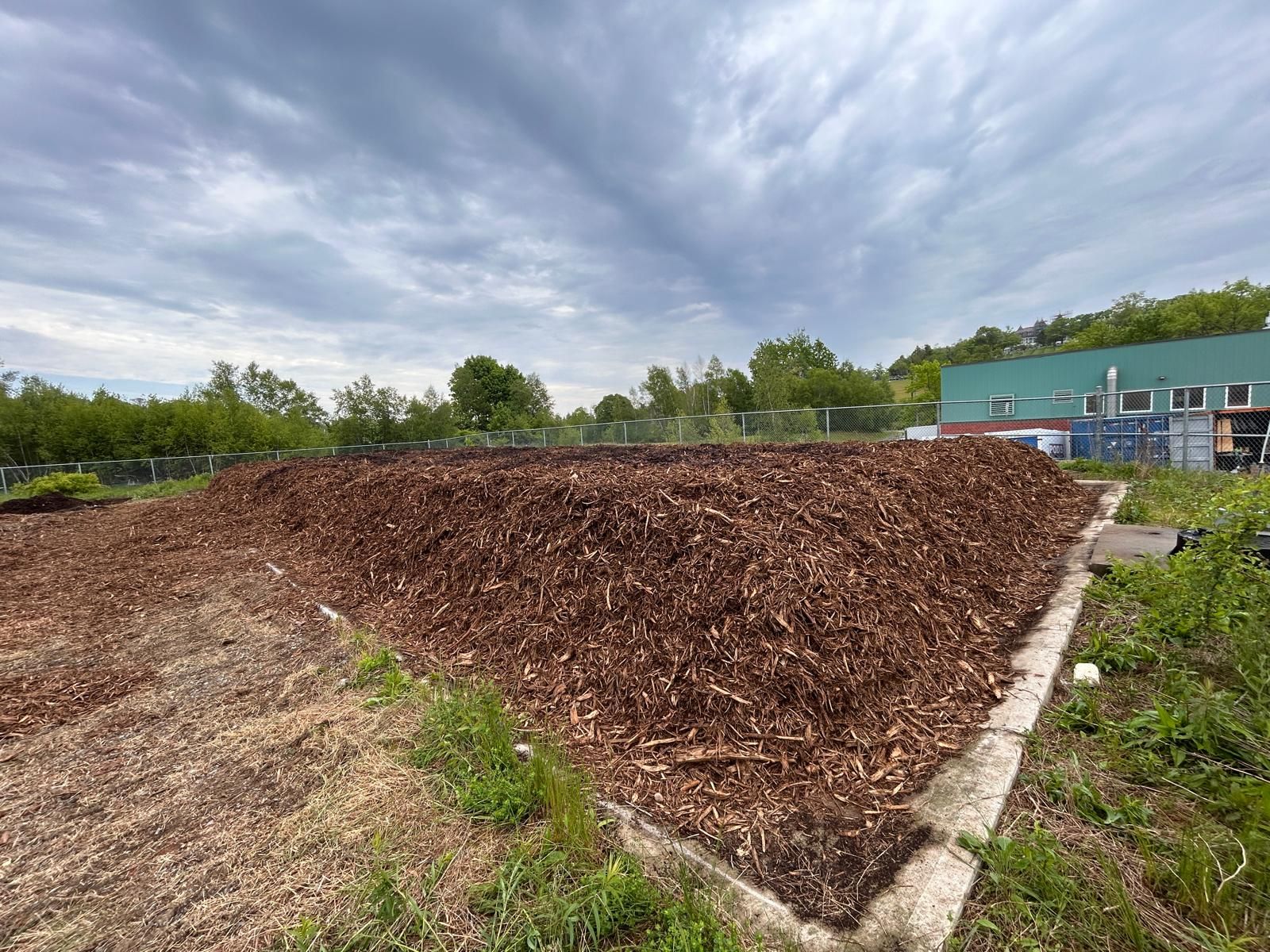
A biofilter media bed at a municipal wastewater facility. Biological systems need a large footprint and a substantial volume of filter media.
Activated Carbon Filtration
Activated carbon adsorbs odour compounds onto the surface of the media. It is a familiar technology across the industry, and a well-matched carbon bed can reach about 99 percent removal, depending on the media selected. Carbon also has good capacity for high-molecular-weight organic compounds.
The trade-off is the media itself. Carbon saturates and must be replaced, in some applications every few weeks or months. That makes media replacement the largest recurring cost of a carbon system, along with the labour to exchange it.
Performance also depends on the air stream. Carbon works best below about 70 percent relative humidity. Rising humidity or temperature can cause desorption, where captured compounds release back into the air.
Other considerations include:
- Preferential adsorption of some gases, which limits performance on certain compound mixtures
- Flammability of the media
- Spent media that may need handling as hazardous waste
- Bacteria and moulds that may pass through untreated
- Backpressure that rises as the media loads, increasing fan energy costs
Chemical Scrubbers
Chemical scrubbers pass foul air through a liquid solution that reacts with specific contaminants. They achieve good efficiency on a targeted pollutant, typically up to 98 percent, and can be switched on and off as needed. Scrubbers also cool hot off-gas from processes such as dryers. A clean water scrubber using plant effluent is an effective way to remove ammonia.
Initial equipment cost can be low. Operating demands are higher. Scrubbers rely on a steady supply of chemicals, a dosing system and constant monitoring. They also produce secondary pollutants and waste chemicals that need handling and disposal.
Because each chemistry targets particular compounds, high overall odour removal may not be possible where foul air contains a mix of compounds. Scrubbers also need protection against freezing and overheating, which adds design and operating requirements in Canadian climates.
For a closer look at these trade-offs, see our comparison of photoionization vs. chemical scrubbers for odour control.
Photoionization (PI)
Photoionization treats odour through oxidation. Ultraviolet (UV) lamps generate oxidizing agents and free radicals that break down odour compounds in the air stream. The air then passes through an adsorbent catalyst that polishes any remaining compounds. The process uses no bacteria and no chemical additions.
Neutralox, the German manufacturer behind NeutraTek’s PI systems, has supplied roughly 700 installations worldwide since 1999. Because oxidation acts on a broad range of compounds, PI treats odour mixtures rather than a single target. Neutralox PI systems achieve more than 99 percent odour removal and more than 99.9 percent H2S removal, typically to non-detect levels, with an outlet guarantee of less than 500 odour units (OU).
The process is particularly effective on reduced sulphur compounds, including H2S, mercaptans, dimethyl sulphide (DMS) and dimethyl disulphide (DMDS). It also reduces or eliminates bacteria and moulds in the treated air.
Operating conditions place few limits on PI. The process operates from -40°C to above 70°C, and inlet relative humidity does not affect treatment. Units start working as soon as they are switched on, which suits intermittent sources such as lift stations.
Maintenance follows a predictable schedule:
- UV lamp replacement every 12,000 operating hours
- Catalyst replacement every 12 to 18 months, depending on saturation
- Dust filter replacement as required, at least once a year
- Routine fan and motor maintenance, such as lubricating bearings
In total, maintenance typically takes 1 to 2 person-days per year per unit.
PI also has a solution for high ammonia concentrations. Where foul air carries very high concentrations of ammonia, a clean water scrubber may be added upstream.
Performance Under Real-World Loads
At the Valleyfield Septage Receiving Station in Calgary, the PI system was designed for average H2S below 5 ppm and peaks below 20 ppm. Actual loads came in above 20 ppm on average, with peaks above 70 ppm. The system continued to meet discharge air quality requirements, with H2S at non-detect levels.
Comparing Odour Control Technologies Side by Side
The table below summarizes how each technology performs across the factors that matter most to operators.
| Technology | Odour removal | Fluctuating loads | Temperature and humidity |
Consumables | Maintenance | Start-up |
|---|---|---|---|---|---|---|
| Photoionization | Over 99%, treats odour mixtures | Highly tolerant | Few restrictions | UV lamps (12,000 hours), catalyst (12 to 18 months) |
Low, 1 to 2 person days per year | Immediate |
| Activated carbon | About 99%, media dependent | Moderately tolerant | Best below 70% relative humidity | Frequent carbon replacement | Moderate | Immediate |
| Biological filtration | 85 to 90% | Slow biological adaptation | Requires controlled conditions | Filter media, water, nutrients | High | Long biological start-up |
| Biotrickling filtration | Over 98% for H2S; 85 to 90% for other compounds | Sensitive biology | Requires controlled conditions | Filter media, water, nutrients | High | Long biological start-up |
| Chemical scrubber | Up to 98%, targets single compounds | Depends on control system | Process-specific requirements | Ongoing chemical additions | High | Depends on consumables |
Cost Factors: Capital, Installation and Operation
When comparing odour control technologies on cost, equipment price is only the first layer. Total installed cost adds the civil work, utilities and supporting infrastructure a system needs. Operating cost adds power, consumables and operator time over the full service life.
On equipment price alone you may find biological, carbon and chemical systems come in slightly lower than PI. The comparison shifts once installation is included. A PI unit requires only a housekeeping pad, a ducted foul air source and power. Its modular design allows installation in about two days, and units can sit close to each odour source, which reduces long duct runs. Biological systems need a water supply, pumps, piping, storage tanks and a large footprint. As a result, PI typically carries the lowest total installed cost of the four.
Operating costs widen the gap:
- Power: The combined draw of PI’s UV lamps and fan motor is lower than the fan power alone for biological and carbon systems.
- Fan energy over time: Pressure loss through a PI unit stays largely constant over the life of the media. Backpressure in biofilters and carbon filters rises over time, which can significantly increase fan energy costs.
- Consumables: PI needs UV lamps and catalyst on a fixed schedule. Carbon systems need frequent media replacement, and chemical scrubbers need a continuous chemical supply which challenge budgeting projections.
- Labour: PI typically needs 1 to 2 person days per year per unit. Biological systems and chemical scrubbers need constant monitoring and care in addition to several days for media replacement.
Exact lifecycle costs depend on site conditions, including flow rate and H2S concentrations, so firm figures come from a site-specific quote. The overall pattern holds across applications: PI offers a competitive capital cost with considerably lower operating costs over its service life.
Preparing a Budget Estimate for Odour Control
A PI budget estimate starts with three numbers:
- Foul air flow, in cfm or m³/h
- Average H2S concentration, in ppm
- Peak H2S concentration, in ppm
A few site details then refine the estimate:
- Whether the air is classified (Class 1, Division 1 or 2) or non-classified
- The available supply voltage
- Whether the foul air is moisture-laden, which calls for a demister
Optional scope can be added from there, including interconnecting and discharge ductwork, an odour stack, fan acoustic cladding and isolators, and control panel customization.
For sites with challenging odour profiles, a small pilot unit treating 150 to 300 cfm can confirm performance before a full installation.
Frequently Asked Questions
Which odour control technology suits lift stations?
Lift stations combine varying airflow, high and fluctuating H2S, limited space and remote locations. PI handles average-to-peak H2S swings without breakthrough, fits a small footprint, runs quietly and needs little maintenance, which makes it well suited to these sites.
How often does odour control media need replacing?
It depends on the technology and the load. Activated carbon can need replacement every few weeks or months at high-H2S sites. PI catalyst is replaced every 12 to 18 months where inlet conditions allow, and UV lamps every 12,000 operating hours.
Does photoionization work in cold climates?
Yes. PI operates from -40°C to above 70°C, and inlet humidity does not affect the process. Biological systems, by contrast, depend on bacterial activity that slows in cold conditions.
Plan Your Next Odour Control Project With NeutraTek
NeutraTek has supplied PI systems to municipalities across Canada, from pump stations in Ottawa to wastewater treatment plants in Sudbury, Niagara-on-the-Lake, Gimli and Campbell River. Comparing odour control technologies for a specific site starts with real data. With flow rate and H2S data in hand, a NeutraTek representative can prepare a budget estimate for next year’s capital plan. Contact NeutraTek to get started.