
When you’re weighing odour control systems, chemical scrubbers are frequently considered when looking for potential solutions. Facilities dealing with foul air streams face fluctuating contaminant loads, strict local air quality regulations, and frustrated neighbours.
You need a system that handles high concentrations of hydrogen sulphide without going over budget or causing endless maintenance headaches. Ideally, a reliable method to strip foul air of its worst components before it has a chance to escape, whether that’s from a municipal wastewater treatment plant, an industrial processing line, or a pump and lift station.
For decades, the standard approach has been to pump heavy doses of caustic soda or bleach into large towers to neutralize gases on contact. However, technology has come a long way. Now, photoionization offers a new way to break down those same volatile organic compounds and hydrogen sulphide molecules.
How Do Chemical Scrubbers Work?
Chemical scrubbers rely on constant liquid reactions. You force contaminated air up through a packed bed medium while spraying a liquid chemical solution down over it. The chemicals react with the foul air, neutralizing the targeted compounds.
This method can require a large physical footprint. You need space for the towering scrubber units themselves, plus the chemical storage tanks, secondary containment berms, and the pipework connecting everything.
Running these systems also creates a heavy logistical load. For starters, you need to schedule regular bulk chemical deliveries. A typical municipal facility might take a thousand gallons of sodium hypochlorite every few weeks. Your operators have to manage the offloading process, monitor pump seals for corrosive wear, and handle the spent chemical wastewater generated by the process. That spent waste stream has to go right back into your plant for treatment and disposal.
Chemical scrubbers are designed to neutralize specific target compounds, such as hydrogen sulphide. They may not effectively treat all odour-causing gases present in complex airstreams. Additionally, any disruption to chemical supply—whether from a failed dosing pump or delayed delivery—immediately reduces treatment efficiency.
How Does Photoionization Work?
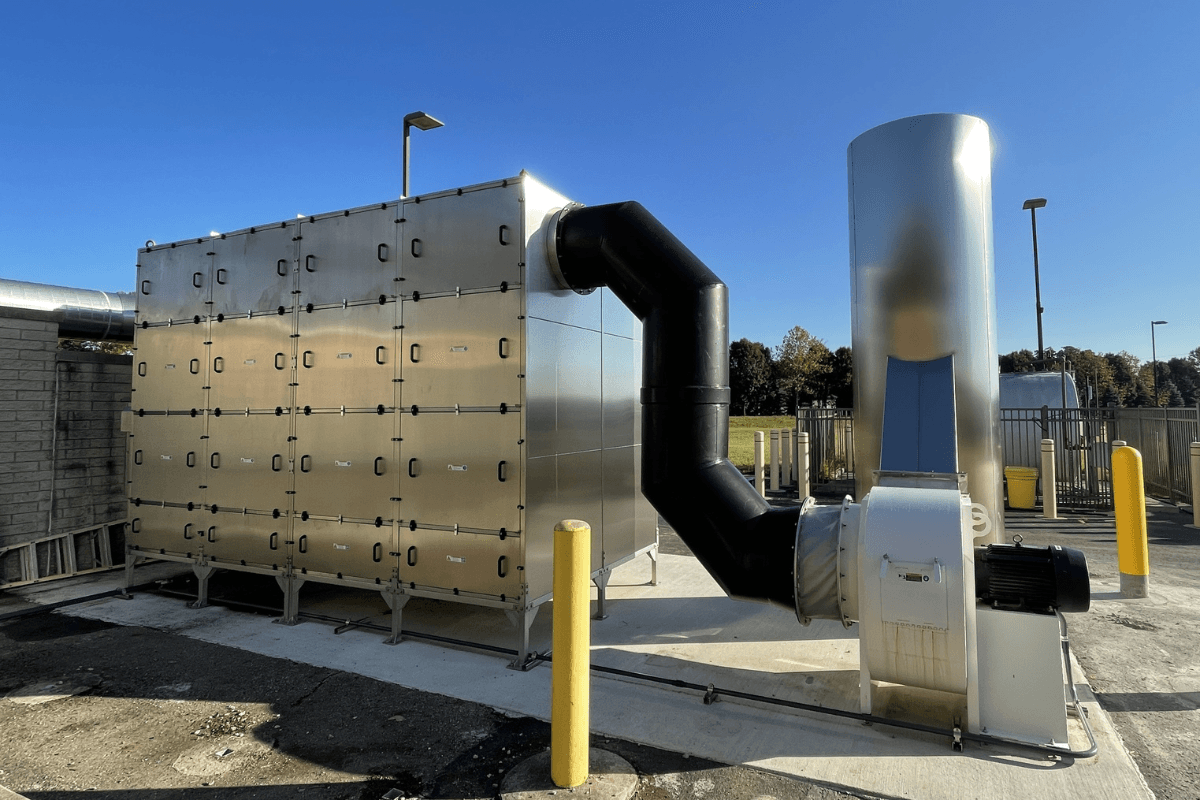
Photoionization approaches the problem differently, through molecular breakdown rather than liquid chemical reactions. A Neutralox photoionization unit has foul air pass into a chamber and exposes it to high-intensity ultraviolet light.
The UV light oxidizes the odour-causing molecules instantly. The light breaks the chemical bonds of hydrogen sulphide, ammonia, and complex volatile organic compounds.
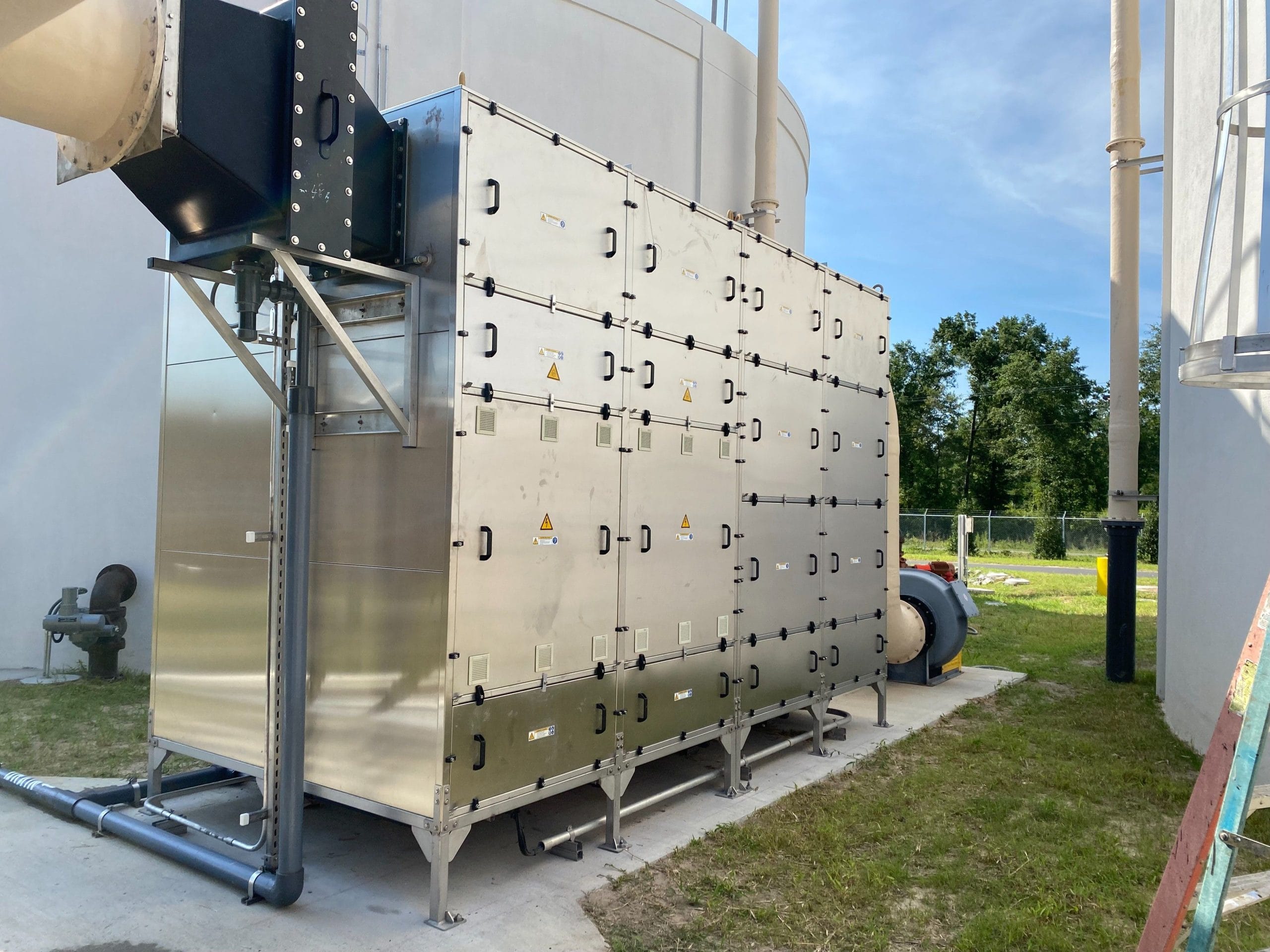
Close-up of a Neutratek photoionization odour control system installation
The process generates highly reactive oxygen species that continue to break down the contaminants. A carbon-based catalyst stage captures the air next, providing a surface for any remaining reactions to finish before the clean air exits into the atmosphere.
You get the same high-level odour removal without storing a single drop of hazardous liquid on your site.
Comparing Photoionization to Chemical Scrubbers
The operational realities of these two systems will likely look completely different:
Managing Consumables and Parts
With a wet scrubber, your maintenance team constantly monitors chemical feed rates, checks pH sensors, and calibrates dosing pumps. Those sensors foul easily in harsh wastewater environments and require frequent cleaning or replacement.
Photoionization systems require much less daily intervention, with their consumable changeouts needing only one or two people 2 days a year. These lamps last 12,000 hours before needing a replacement. You change the carbon-based catalyst every 12 to 18 months, depending on your specific loading rates. With this system, your team spends its time running the actual treatment plant rather than constantly monitoring the odour-control equipment.
Footprint and Installation
If you want to retrofit an existing pump station with chemical scrubbers, you usually need to pour new concrete pads and build designated chemical storage areas. The infrastructure requirements scale up quickly.
Photoionization units, on the other hand, arrive skid-mounted and preassembled. You place the unit on a basic concrete foundation, connect your power supply, attach the ductwork, and turn it on. You can tuck a Neutralox unit into a tight corner of your property where a scrubber system would never fit.
Safety and Environmental Impact
Handling bulk sodium hydroxide and sodium hypochlorite introduces significant safety risks to your site. A minor leak or spill during a truck transfer poses an immediate hazard to your staff. You also bear the environmental cost of manufacturing those chemicals and trucking them to your facility, week after week.
Photoionization removes those hazards entirely. Your operators never wear chemical splash suits when they’re working on the system, and you eliminate heavy truck traffic on your access roads. The oxidation process breaks the odours down into neutral, clean byproducts without generating any hazardous sludge or spent liquid waste.
Keeping Up When Operations Get Busy
Facilities may encounter numerous challenges during peak flow or within tight regulatory timelines.
Maybe it’s a heavy rainstorm that surges flow through your pump station, or a production line that cranks out a new batch of raw ingredients, sending out fresh waves of off-gas. If you have a chemical scrubber running, you’ll likely notice it right away in your chemical usage. Your dosing pumps work overtime, chemical tanks drain faster, and it takes more time and money to keep everything balanced.
Photoionization systems absorb these operational swings more effectively. You don’t have to schedule extra deliveries when flows spike or keep staff on overtime. The unit keeps breaking down contaminants across a range of operating conditions, and maintenance follows a predictable schedule.
The flexibility of photoionization is especially useful in sites with unpredictable loading, such as municipal pump stations that handle everything from spring thaws to industrial discharges. Because you avoid emergency calls for chemical deliveries and free up your team to do the jobs only people can do, photoionization scales better with the realities of your operation.
Making the Right Choice for Your Plant
When you’re selecting an odour control system, you have to balance total life-cycle costs, ongoing maintenance budgets, and the safety of your operators. Chemical scrubbers handle massive air volumes effectively, but they also trap you in a cycle of chemical purchasing and intensive maintenance. Photoionization gives you top-tier odour removal, exceeding 99% H₂S removal efficiency, with a fraction of the daily headache.
Take a hard look at your current maintenance logs and chemical invoices. Calculate the true cost of operating your existing systems, including the staff hours spent handling deliveries and replacing corroded pump parts.
Then, if you want a reliable, clean, and highly effective way to eliminate odours at your facility, contact NeutraTek to talk about sizing a photoionization system for your specific site conditions.